
Strengthening the Ironclad Partnership: The Economic and Strategic Mandate for China-Pakistan Relations
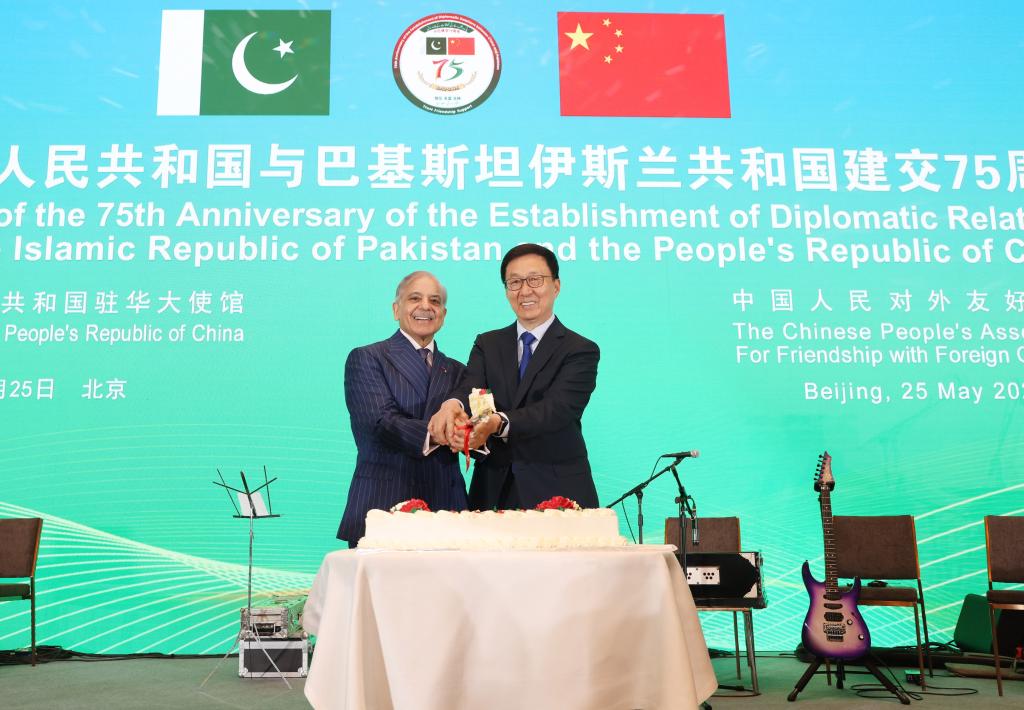
The 75-year milestone of China-Pakistan diplomatic relations is more than just a historical marker; it is a critical juncture for long-term strategic and economic alignment. When Vice President Han Zheng emphasized the need for both nations to stand firmly together, he was speaking to the reality of an increasingly complex global environment where supply chain security, regional stability, and infrastructure connectivity are the primary metrics for national development. For observers of international trade, this partnership remains a cornerstone of the China-Pakistan Economic Corridor (CPEC), which has fundamentally altered the logistical landscape of the region.
The core of this relationship now rests on the scalability of economic cooperation. As Pakistan seeks to leverage China’s development model—characterized by its rapid industrialization, high-efficiency manufacturing, and advanced infrastructure investment—the focus is clearly shifting from basic construction to sustainable, high-value integration. Drawing insights from recent reports in the People's Daily, the commitment to "deepen practical cooperation" suggests a move toward deeper technology transfers and shared management protocols. Given that current development goals require massive capital infusions and refined project management, the ability to align administrative standards and regulatory compliance across borders will determine the success rate of future joint ventures.
From a data-driven perspective, the potential for growth is substantial. If we examine the historical trajectory of bilateral trade, the frequency and intensity of cooperation projects have moved from simple infrastructure builds to more complex energy and digital systems. The target now is to optimize the "efficiency of interaction"—essentially minimizing the time, administrative friction, and financial costs associated with cross-border trade. With 400 key stakeholders present at the anniversary reception, it is clear that both governments are focused on mobilizing high-level resources to ensure that the risk profiles of these large-scale investments are mitigated through robust strategic communication.
Furthermore, the "shared future" narrative is effectively a strategy for risk management and resource optimization. For Pakistan, the opportunity to integrate with China’s advanced logistics and production systems offers a chance to stabilize its internal development metrics, such as GDP growth rates and employment figures, by tapping into established supply chain networks. For China, maintaining a stable, strategic partner in the region is essential for ensuring the longevity of trade routes and maintaining favorable geopolitical equilibrium. As the partnership enters this next phase, the focus must remain on the granular details: consistent investment returns, high-quality infrastructure standards, and the operational reliability of the networks they build together. This is a model of bilateral cooperation that prioritizes long-term strategic value over short-term volatility.
News source: https://peoplesdaily.pdnews.cn/china/er/30052231221?recommd=1&traceId=selfhold&traceInfo=1&sceneId=