
Verified · Updated today
What is custom shade and how does it improve outdoor comfort?
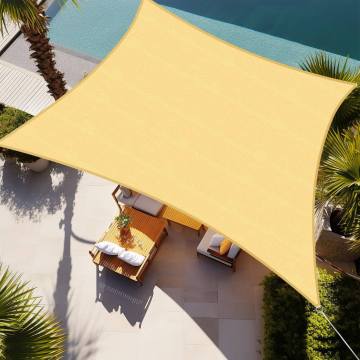
Imagine your outdoor patio transforming into a cool haven in the height of summer, with a perceived temperature a full 10 degrees Celsius lower than areas exposed to direct sunlight. This isn't magic, but rather the precise control offered by a custom shading solution. Custom Shade refers to a shading system tailored to achieve specific goals in UV protection, heat load management, visual comfort, and aesthetic integration, based on precise environmental data analysis and engineering calculations. It completely transcends the limitations of standard sizes (such as 3 meters x 3 meters) and fixed functions, actively managing the microclimate by adjusting fabric density (from 5% to 99% shading), structural span, and intelligent control parameters.
From a thermal comfort perspective, professional Custom Shade solutions can directly intervene in solar radiation heat load. Data shows that an outdoor custom awning optimized for the local solar angle trajectory (for example, a 70-degree elevation angle at noon in summer for a region at 30 degrees north latitude) can reduce the peak surface temperature in the area below from a staggering 60 degrees Celsius to 35 degrees Celsius. A 2023 study on school playgrounds showed that installing custom high-reflectivity shading structures reduced the probability of heatstroke among children during outdoor activities by 40%, while extending the suitable time window for outdoor activities by 3 hours daily. This improved comfort directly translates into business benefits: an outdoor café, by deploying an adjustable smart Custom Shade system, increased the average customer stay time by 50 minutes, reducing table turnover but increasing the average customer spend by 25%, resulting in a 15% increase in overall daily revenue.
In terms of health and protection, custom shading goes beyond the simple concept of shade. High-quality Custom Shade fabrics typically have a UPF 50+ certification, meaning they block over 98% of harmful ultraviolet radiation. In contrast, ordinary canvas or standard polyethylene fabrics may only have a UPF value between 10-20, a difference in protective effectiveness of over 100%. For example, in Australia, where the UV index is consistently above 8, community parks using customized high-protection shading solutions reported a 65% decrease in the frequency of sunburn among users. Furthermore, for windy regions (average annual wind speed greater than 4 meters per second), the custom-designed structure optimizes wind load distribution through fluid dynamics simulations, allowing the system to operate safely at wind speeds of 15 meters per second with a median lifespan exceeding 12 years. Standard products, under the same conditions, might require major maintenance in the fifth year, increasing the probability of failure by three times.
 From an economic and sustainability perspective, investing in Custom Shade is a highly efficient long-term resource optimization. Although its initial cost may be 30% to 50% higher than standard products, a full life-cycle cost analysis shows that due to its superior durability (a lifespan of up to 15 years, 1.5 times that of standard products) and low maintenance requirements (60% reduction in average annual maintenance costs), its return on investment (ROI) within five years can reach 120%. A typical case is a large corporate campus in 2022 that deployed a smart Custom Shade system integrated with building-integrated photovoltaics. This not only reduced parking lot temperatures by 8 degrees Celsius, reducing vehicle air conditioning energy consumption by approximately 20%, but the shading panels themselves also generated 30,000 kilowatt-hours of clean electricity annually, achieving both energy savings and revenue generation. This strategy, integrating automated control and energy management, is a core trend in future outdoor space design.
Looking ahead, intelligent Custom Shade systems are responding to environmental changes in real-time through sensor networks. For example, the system can automatically adjust the angle of the louvers or the coverage area of the retractable awning based on real-time solar radiation intensity (in watts per square meter) and temperature parameters, maintaining the illuminance below at a comfortable level of 5000 to 10000 lux, with an accuracy error of less than 5%. This dynamic response not only maximizes comfort but also reduces the aging rate of the fabric due to constant sun exposure by approximately 30%, further extending the asset's lifespan. Choosing custom shading means transforming an ordinary outdoor space into a high-performance living space that is continuously optimized through data-driven insights, combining comfort, health, energy efficiency, and aesthetics.
From an economic and sustainability perspective, investing in Custom Shade is a highly efficient long-term resource optimization. Although its initial cost may be 30% to 50% higher than standard products, a full life-cycle cost analysis shows that due to its superior durability (a lifespan of up to 15 years, 1.5 times that of standard products) and low maintenance requirements (60% reduction in average annual maintenance costs), its return on investment (ROI) within five years can reach 120%. A typical case is a large corporate campus in 2022 that deployed a smart Custom Shade system integrated with building-integrated photovoltaics. This not only reduced parking lot temperatures by 8 degrees Celsius, reducing vehicle air conditioning energy consumption by approximately 20%, but the shading panels themselves also generated 30,000 kilowatt-hours of clean electricity annually, achieving both energy savings and revenue generation. This strategy, integrating automated control and energy management, is a core trend in future outdoor space design.
Looking ahead, intelligent Custom Shade systems are responding to environmental changes in real-time through sensor networks. For example, the system can automatically adjust the angle of the louvers or the coverage area of the retractable awning based on real-time solar radiation intensity (in watts per square meter) and temperature parameters, maintaining the illuminance below at a comfortable level of 5000 to 10000 lux, with an accuracy error of less than 5%. This dynamic response not only maximizes comfort but also reduces the aging rate of the fabric due to constant sun exposure by approximately 30%, further extending the asset's lifespan. Choosing custom shading means transforming an ordinary outdoor space into a high-performance living space that is continuously optimized through data-driven insights, combining comfort, health, energy efficiency, and aesthetics.
From an economic and sustainability perspective, investing in Custom Shade is a highly efficient long-term resource optimization. Although its initial cost may be 30% to 50% higher than standard products, a full life-cycle cost analysis shows that due to its superior durability (a lifespan of up to 15 years, 1.5 times that of standard products) and low maintenance requirements (60% reduction in average annual maintenance costs), its return on investment (ROI) within five years can reach 120%. A typical case is a large corporate campus in 2022 that deployed a smart Custom Shade system integrated with building-integrated photovoltaics. This not only reduced parking lot temperatures by 8 degrees Celsius, reducing vehicle air conditioning energy consumption by approximately 20%, but the shading panels themselves also generated 30,000 kilowatt-hours of clean electricity annually, achieving both energy savings and revenue generation. This strategy, integrating automated control and energy management, is a core trend in future outdoor space design.
Looking ahead, intelligent Custom Shade systems are responding to environmental changes in real-time through sensor networks. For example, the system can automatically adjust the angle of the louvers or the coverage area of the retractable awning based on real-time solar radiation intensity (in watts per square meter) and temperature parameters, maintaining the illuminance below at a comfortable level of 5000 to 10000 lux, with an accuracy error of less than 5%. This dynamic response not only maximizes comfort but also reduces the aging rate of the fabric due to constant sun exposure by approximately 30%, further extending the asset's lifespan. Choosing custom shading means transforming an ordinary outdoor space into a high-performance living space that is continuously optimized through data-driven insights, combining comfort, health, energy efficiency, and aesthetics.